Fort Worth Personal Injury Lawyer

Have you recently been injured or lost a close family member in an accident in Fort Worth, Texas? Reach out to the experienced legal team of Fort Worth personal injury lawyers at Parker Law Firm Injury Lawyers for immediate assistance at (817) 510-9400.
You deserve to be compensated for your medical bills, loss of income, and the devastating life changes you’ve experienced.
Since 2001, we’ve been leading accident victims and grieving families in Fort Worth to successful results in cases involving car accidents, truck accidents, construction accidents, slips and falls, wrongful death, and other personal injury matters.
Our results are a testament to our hard work and commitment to our clients. We’ve won millions in life-changing private settlements and jury awards.
Benefit from an award-winning legal team with 40+ years of experience and a demonstrated ability to win tough personal injury cases like yours.
Contact our law office in Fort Worth, TX at (817) 510-9400 to get started. Your first consultation is free, and there’s no cost to hire our law firm unless we win your case.
Why Choose Parker Law Firm Injury Lawyers to Handle Your Fort Worth Injury Case?

The dedicated Fort Worth personal injury attorneys at Parker Law Firm Injury Lawyers are trusted throughout Texas. Our fierce and ambitious representation is what you want when you’re trying to recover the compensation you need after an accident or injury.
Founding Attorney, Brad Parker, is locally and nationally recognized as a highly accomplished and ethical legal advocate. He has been Board Certified in Personal Injury Trial Law by the Texas Board of Specialization since 1997. Less than 2% of licensed Texas attorneys hold this distinction. Throughout his career he has served as President of the Texas Trial Lawyers Association and President of the Tarrant County Bar Association. He is the only personal injury attorney in the Dallas–Fort Worth region to have served as president of both organizations. He is also a Member of ABOTA and a Fellow of the American College of Trial Lawyers, both invitation-only organizations.
For decades, we’ve been obtaining successful results for accident victims and grieving families in Fort Worth and surrounding areas. Our results are a testament to our hard work and commitment to our clients. We’ve won over $100 million in life-changing private settlements and jury awards.
When you hire our attorneys, we’ll handle all aspects of your case and get the compensation you need and deserve. Benefit from a legal team with 37+ years of combined experience and a demonstrated ability to win tough personal injury cases like yours.
Call our Fort Worth personal injury law firm today for a free consultation to learn more about an attorney-client relationship.
Why Should I Hire a Personal Injury Lawyer?

When you get into an accident, you’ll almost always have to deal with the insurance company. Despite what their advertisements might say, insurers aren’t on your side.
They’re in the business of making money. That’s hard to do if they pay out on every claim that comes across their desk.
They will fight you and do whatever they can to stand between you and the money you deserve. Our Fort Worth lawyers have seen it all. They might offer a lowball settlement with a short deadline, attempting to scare you into accepting less than your case is worth.
They’ll try to take advantage of the fact that they have a lot of experience handling these claims and you don’t. Hiring our Fort Worth lawyers after an accident can help to stop these tactics from working.
Visit Our Fort Worth, TX Personal Injury Law Office
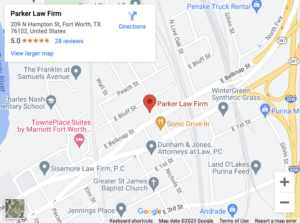
You can find our office at 209 N. Hampton St., Fort Worth, TX 76102.
Visit our Fort Worth law office
Personal Injury Cases We Handle in Fort Worth

At Parker Law Firm Injury Lawyers, all we do is personal injury plaintiff litigation. We never represent insurance companies – only clients like you who have suffered needless and painful injuries through little-to-no fault of their own.
Our Fort Worth personal injury lawyers handle all types of injury cases, including:
Car accidents

Fort Worth has a high rate of car accidents. These accidents are a leading cause of injury and death in the area. If you’ve been injured in an auto accident, you could be entitled to compensation from the at-fault driver. Our Fort Worth car accident lawyers can help you understand your rights and options.
Truck accidents

Texas has one of the highest rates of truck accidents in the country. It’s clear large commercial trucks pose dangers to other road users in Texas. If you’ve been in an accident with a large truck, you may have rights against the truck driver or trucking company. Our Fort Worth truck accident lawyers can help you hold these parties accountable for the damages they’ve caused.
Motorcycle accidents

Fort Worth can be a difficult place to ride a motorcycle due to congestion and careless drivers. Moreover, Texas drivers often fail to look out for motorcyclists. You could be entitled to substantial compensation if a negligent driver struck your bike. Our Fort Worth motorcycle accident attorneys can help you pursue justice and fair compensation after your motorcycle accident.
Slip and fall accidents

Business owners in Texas have a duty to keep their premises reasonably safe for guests. That means they must inspect their premises for hazards, fix obvious dangers, and warn of conditions that cannot be fixed right away. If you slipped and fell at a business, you may be able to recover a monetary award for related damages. Our Fort Worth slip and fall attorneys can help you navigate your personal injury claim.
Dram Shop Liability

Bars and restaurants have a duty to not overserve customers. If a bar or restaurant has provided a customer with too much alcohol, despite knowing they are intoxicated, it can be liable for drunk driving accidents caused by the customer. Our legal team has extensive experience handling dram shop liability cases. Contact our Fort Worth dram shop liability lawyers today to explore your legal options against a bar or restaurant after a drunk driving accident.
Brain injuries

Brain injuries can happen in almost any type of accident. However, they are one of the most serious injuries a person can suffer; they can affect cognition, mobility, and many other areas of life. Our Fort Worth brain injury attorneys can help you get justice after a brain injury. We can help you hold the at-fault party responsible for your medical bills (past and future), lost income, and pain and suffering.
Wrongful death

Did you lose a loved one in a fatal accident in Texas? You may have a wrongful death claim under Texas law. These claims allow you to pursue compensation for your loss of support and your loved one’s damages before they died. Our law firm is a leader in Texas wrongful death claims. Our Fort Worth wrongful death lawyers can help your family obtain justice after your loss.
Other types of injuries we cover:
- Pedestrian accidents
- Product liability cases
- Premises liability cases
- Spinal cord injuries
- Burn injuries
- Dog bite cases
- Back injuries
- Defective medical device claims
- Dangerous drug cases
- Child sexual abuse
- Sexual assault
Reach out to a member of our team to discuss your legal rights and options after an accident in Fort Worth.
Fort Worth, TX Accident Statistics

Unfortunately, Texans are involved in tens of thousands of accidents annually.
Auto accidents are the most common cause of injuries in the state each year.
According to statistics from the Texas Department of Transportation, 13,401 crashes were reported in Fort Worth in 2022. They resulted in:
- 120 fatalities
- 516 suspected serious injuries
- 2,721 suspected minor injuries
That means in 2022, at least 25 people were injured or killed in motor vehicle accidents in the city every day. Fort Worth made up over 3% of the state’s total collisions.
Additionally, 533 people in Texas died on the job in 2021. Nearly 49% of fatal work-related deaths were caused by transportation incidents, and 16.5% were caused by slips, trips, and falls.
Thousands more Texas residents are injured and killed by medical malpractice, dog bites, defective products, and other incidents.
How Much Does a Personal Injury Attorney Cost?

The main concern for most people when they consider hiring a lawyer is the expense. They wonder, “How much will is hiring an attorney going to cost me?” In personal injury cases, lawyers’ services are offered on a contingency basis, meaning the lawyers’ fees for representing their client will come from the final personal injury settlement.
If a client doesn’t get a favorable outcome, then the lawyer collects no fees. It’s important to point out that these costs, unlike the contingency fee, must be paid by your lawyer even if you lose your case. In this fee structure, all parties unequivocally agree beforehand to the sharing percentage.
Before we take a case, we perform a comprehensive review of the facts to ensure that there is sufficient evidence to win compensation for our clients. This initial consultation is complimentary.
Our Fort Worth lawyers will ask questions about the circumstances leading up to and surrounding your accident and give you a general assessment of your case.
The attorney you choose to represent you matters. Put a team of experienced, top-rated, award-winning litigators on your case. Call Parker Law Firm Injury Lawyers to set up a free consultation now.
Common Types of Injuries in Fort Worth Accidents

Any unexpected accident has the potential to cause serious, potentially life-changing injuries.
At Parker Law Firm Injury Lawyers, we frequently advocate for clients who have suffered:
- Traumatic brain injury
- Amputation
- Nerve damage
- Spinal cord injury
- Neck injury
- Whiplash
- Back injury
- Crushing injury
- Eye injury
- Soft tissue damage
- Broken bones
- Chest injury
- Burns
- Wrongful death of a family member
A member of our legal team in Fort Worth is always available to provide the help and guidance you need after a devastating accident. Don’t hesitate to give us a call today.
What Should I Do After an Accident in Fort Worth, TX?

The steps you take in the days and weeks after an accident can be critically important.
Here’s what you should do – and should avoid doing – after your Fort Worth accident:
- Report the accident to the police and/or the responsible party
- Document the scene of the accident by taking pictures and recording a quick video
- Write down your memory of the event
- Resist the temptation to apologize or accept blame for the accident
- Seek medical attention at the closest hospital in Fort Worth
- Preserve evidence – including clothing worn at the time of the accident and any damaged property
- Reject requests to provide a written or recorded statement to an insurance company
- Hire an experienced personal injury lawyer near you in Fort Worth to represent you and protect your interests
Simple things – like getting prompt medical treatment and refusing to answer an insurance adjuster’s questions – can have a huge impact on your personal injury case.
What Compensation Can I Recover in a Fort Worth Personal Injury Claim?

In most personal injury cases, there are two types of damages available to accident victims: economic and non-economic.
Economic damages offset the monetary losses related to an accident, while non-economic damages help to compensate for personal trauma and suffering.
Our experienced Fort Worth personal injury attorneys will fight to get you money for:
- Medical expenses
- Rehabilitation
- Physical therapy
- Nursing assistance
- Property damage
- Out-of-pocket expenses
- Disability
- Lost wages
- Pain and suffering
- Emotional distress
- Disfigurement
- Reduced quality of life
- Post-traumatic stress disorder
- Loss of consortium
- Funeral expenses
Punitive damages can also be awarded when a jury finds convincing evidence of a defendant’s intentionally harmful or grossly negligent conduct.
What Is the Personal Injury Claim Process?

Most personal injury cases begin with an insurance claim. The accident victim, or plaintiff, files a claim with the at-fault party’s insurance company, requesting benefits under the insured’s policy.
The claim begins with a demand letter, which outlines the victim’s case, explains liability, and outlines the victim’s damages. The demand letter is backed up by supporting documents and evidence.
The insurance company must consider the claim in good faith. It cannot deny the claim or delay the payment of compensation without a legitimate reason.
When considering the claim, the insurance company can agree to settle for the full amount requested, counter with a lower settlement offer, or deny the claim in full.
Typically, insurance claims go through a few rounds of negotiation, with each side fighting to either increase or decrease the payout.
If the case isn’t settled – or if the victim’s damages exceed what the insurance company is willing to pay – the case can move on to litigation.
In litigation, the plaintiff brings a personal injury lawsuit against the person (or parties) responsible for their accident. This begins when the plaintiff files a claim with their local court in Fort Worth and serves copies of the lawsuit to the defendant.
After the lawsuit is filed, the discovery process kicks off. This is a period of time in which each party can interview and depose witnesses, request documents from the opposing party, and gather evidence about the case.
Once discovery has ended, a trial date will be set. The trial is an opportunity for both parties to argue their cases before a judge and/or jury. A personal injury lawsuit can settle at any point in time before a jury returns with a verdict. Once a jury issues a verdict, the result is final (pending appeals).
Can I Still Receive Compensation If I’m Partially At Fault for an Accident in Fort Worth, TX?

Possibly. Texas operates under a modified comparative negligence statute. There is a 51 percent bar to recovery. Sharing most of the blame for an accident in Fort Worth, Texas will prevent a third-party financial recovery.
Sharing some of the blame will impact how much money you can get. Your financial award will be directly related to your role in the accident. Damages are reduced proportionately.
If you’re assigned 10 percent of the blame for your accident, your financial award will be reduced by 10 percent.
It’s important to work with an experienced personal injury attorney in Fort Worth if you’ve been hurt in an accident – especially if you think that you might be partly to blame. At Parker Law Firm Injury Lawyers, we’ll fight to limit the impact of shared responsibility and get you as much compensation as possible under the law.
Do I Have a Personal Injury Case?

You likely have a valid personal injury claim if you were harmed due to another party’s reckless or negligent actions.
For example, you may have a case if:
- A distracted driver crashed into your SUV, causing whiplash and a broken bone
- A motorcyclist failed to yield the right of way and hit you while walking in a crosswalk
- You slipped and fell on a slick surface while shopping
- A dog attacked you on public property
- You were injured while performing job duties
- Someone assaulted you and caused traumatic injuries
- You suffered a severe burn due to a defective product
- You lost a loved one in a fatal truck accident (wrongful death)
These and various other situations and scenarios can give rise to a personal injury case. Schedule a free initial consultation with our experienced injury lawyers to discuss what happened and the next steps.
How Long Do I Have To File a Personal Injury Lawsuit in Texas?

In Texas, the statute of limitations for most personal injury cases is two years. So, you’ll have two years from the date you were injured or discovered your injury to file a legal claim for damages.
You will lose the right to recover compensation if you don’t file your claim before the deadline expires.
Protect yourself by reaching out to a member of our experienced legal team in Fort Worth for help right away.
Texas Personal Injury Laws

Various Texas laws can affect your personal injury case. However, there are some you need to be aware of when initiating a claim.
- Texas follows a modified comparative fault rule. Under the law, an accident victim cannot recover compensation if their percentage of fault is more than 50%. So, if you were 51% responsible for a pedestrian accident, you’re prevented from receiving money for your damages. However, if your share of the blame is 50% or less, your damages will be reduced proportionately.
- You must file your claim within the applicable Texas statute of limitations. Most times that means you’ll have two years from the date of your accident to take legal action. However, exceptions exist in some cases.
It’s best to consult an experienced personal injury attorney in Fort Worth to ensure that your rights are protected. Your lawyer can guide you through the process and help you understand the laws that apply to your specific case.
FAQs
In personal injury cases, lawyers’ services are offered on a contingency basis, which means the lawyer’s fees come from the final settlement. If you don’t get a favorable outcome, the lawyer collects no fees. At Parker Law Firm Injury Lawyers, your first consultation is free, and there is no cost to hire our law firm unless we win your case.
Report the accident to the police and/or the responsible party, document the scene with pictures and a quick video, and write down your memory of the event. Do not apologize or accept blame, seek medical attention at the closest hospital, and preserve evidence such as clothing worn at the time and any damaged property. Reject requests to provide a written or recorded statement to an insurance company, and hire an experienced personal injury lawyer to protect your interests.
Possibly. Texas follows a modified comparative negligence rule with a 51 percent bar to recovery, so you cannot recover compensation if your share of fault is more than 50%. If your share of the blame is 50% or less, your damages are reduced proportionately. For example, if you are assigned 10 percent of the blame, your financial award is reduced by 10 percent.
In Texas, the statute of limitations for most personal injury cases is two years from the date you were injured or discovered your injury. You will lose the right to recover compensation if you do not file your claim before the deadline expires, although exceptions exist in some cases. Reach out to an experienced personal injury attorney right away to protect your rights.
In most personal injury cases, two types of damages are available: economic and non-economic. Economic damages offset the monetary losses related to an accident, while non-economic damages help compensate for personal trauma and suffering. Compensation may include medical expenses, rehabilitation, physical therapy, nursing assistance, property damage, out-of-pocket expenses, disability, lost wages, pain and suffering, emotional distress, disfigurement, reduced quality of life, PTSD, loss of consortium and funeral expenses. Punitive damages can also be awarded when a jury finds convincing evidence of intentionally harmful or grossly negligent conduct.
Schedule a Free Consultation With an Experienced Fort Worth Personal Injury Lawyer
You do not have to struggle with the consequences of an unexpected accident or injury on your own. Call Parker Law Firm Injury Lawyers, and discover the considerable benefits of working with our top-rated Fort Worth personal injury attorneys.
We have the experience, exhaustive knowledge of Texas personal injury law, and resources you’ll need to make the most of your fight for compensation.
Call our law office in Fort Worth, TX to get started and set up a free consultation now. We’re always here to answer – 24/7/365.
Highly Rated Emergency Rooms in Fort Worth
- TotalCare Emergency Room – 1101 University Dr, Fort Worth, TX 76107, United States
- Medical City Fort Worth Emergency Room – 800 9th Ave Emergency, Fort Worth, TX 76104, United States
- Texas Health Harris Methodist Emergency Room – 910 5th Ave, Fort Worth, TX 76104, United States
- Baylor Scott & White All Saints Medical Center – Fort Worth Emergency Room – 1400 8th Ave, Fort Worth, TX 76104, United States
*Disclaimer – we do not endorse these companies or profit from having them listed on our website.
What Our Fort Worth Clients Are Saying About Us
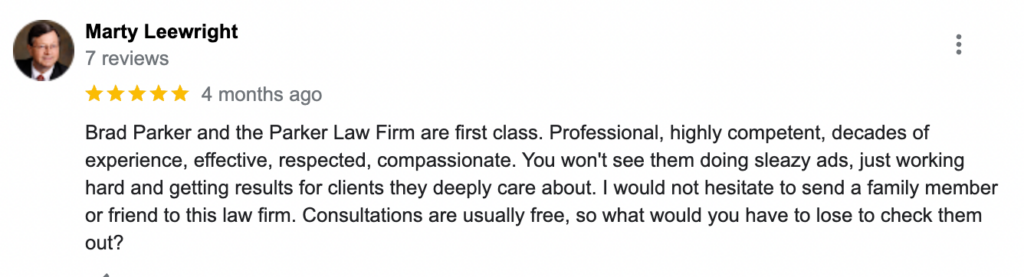
Read more of our Google Reviews.