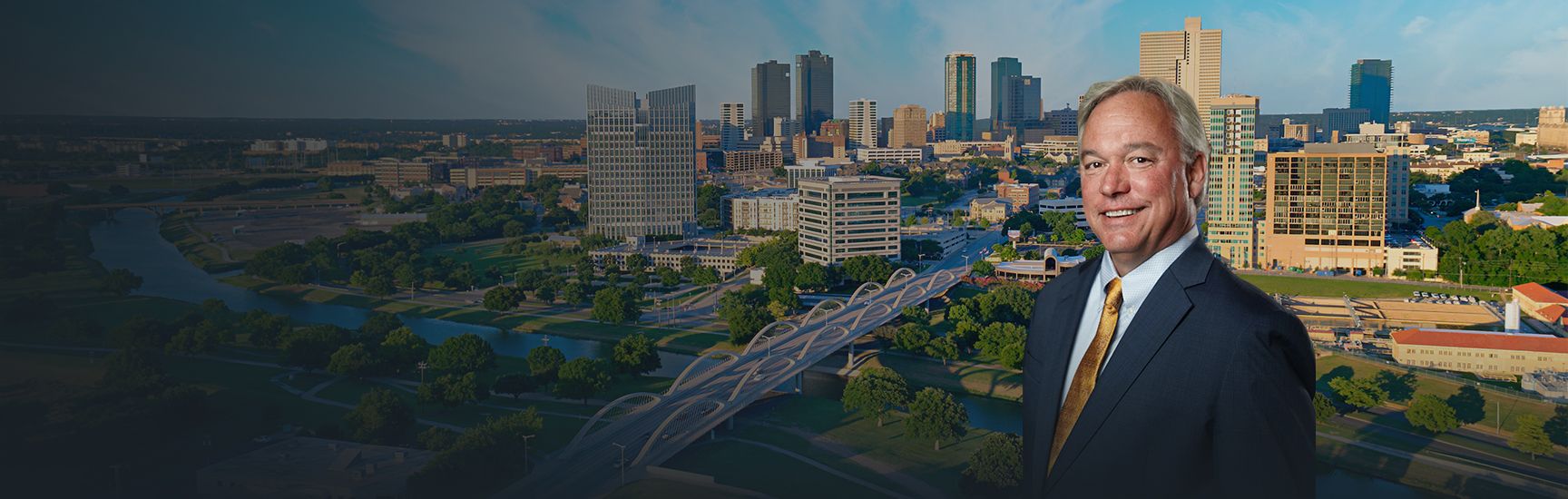
After more than four decades representing Texas families in catastrophic injury and wrongful death cases, W. Bradley “Brad” Parker has learned to be cautious when responsibility for a tragedy is assigned before all the evidence has been examined.
In the aftermath of a fatal accident, an initial explanation can quickly become the accepted account of what happened. Employers, contractors, insurance companies, and investigators may reach conclusions based on the information immediately available to them. But those conclusions do not always reflect the full circumstances of an accident, particularly when questions about equipment safety and maintenance have not yet been answered.
For Brad, understanding what happened means examining the evidence behind those early conclusions, especially when the explanation places responsibility on someone who is no longer alive to tell their side of the story.
One wrongful death case involving a roadway construction worker illustrates why that distinction matters.
A Fatal Accident on an Overnight Road Crew
The worker was part of a crew performing roadway repairs overnight when a work vehicle backing through the construction zone struck and killed him.
In the aftermath, several of the companies involved suggested that the worker had failed to notice the approaching truck or hear its backup warning alarm.
The explanation placed much of the responsibility on the person who had died.
For his family, that account raised painful questions. They wanted to understand how the accident had happened, whether it could have been prevented, and whether their loved one had truly failed to recognize a danger that should have been apparent.
Brad represented the family in the resulting wrongful death claim.
Rather than accepting the initial explanation, he began examining the circumstances surrounding the vehicle, its safety equipment, and the responsibilities of the companies involved in the roadway operation.
An important question emerged: Was the warning alarm the worker supposedly failed to hear actually functioning?
What the Investigation Revealed
After filing suit, Brad’s team pursued formal discovery to examine the equipment involved in the accident and the circumstances under which it had been placed into service.
The investigation uncovered evidence that the truck’s audible reverse-warning alarm was not functioning.
That discovery changed the understanding of the accident.
The initial explanation had focused on the worker’s failure to hear or respond to a warning. But the evidence raised a more fundamental question about whether the vehicle had provided the warning in the first place.
Brad’s investigation expanded to examine how the truck had been maintained, whether its safety equipment had been inspected, and which companies bore responsibility for ensuring that the vehicle was safe to operate in an active roadway construction zone.
Those questions were especially important because the accident involved more than the actions of a single driver or worker.
The truck had been placed into service as part of a commercial roadway operation involving multiple companies. Understanding responsibility required examining the relationships among those businesses and their respective obligations concerning the vehicle and its safety equipment.
Through discovery, expert analysis, and further investigation, Brad identified the party responsible for the defective safety equipment.
The case ultimately resolved through a settlement that provided compensation to the worker’s family.
For the family, however, the significance of the investigation extended beyond the financial resolution.
The initial explanation had suggested that their loved one failed to recognize an approaching vehicle despite an audible warning. The evidence revealed that the warning system itself was not functioning.
That discovery provided a substantially different understanding of the circumstances surrounding his death.
What This Case Reinforced
For Brad, this case illustrates why a wrongful death investigation must examine the evidence supporting an initial explanation before accepting its conclusions.
When an accident involves heavy equipment, commercial vehicles, or an active construction site, responsibility may extend beyond the person operating the machinery or the individual who was injured.
Equipment condition, maintenance practices, inspection procedures, and the responsibilities of multiple companies can all be relevant to understanding how an accident occurred.
In this case, the early account focused on what the worker supposedly failed to do. The investigation revealed a defect in the very safety equipment that was supposed to warn him of the approaching truck.
That distinction was central to understanding the tragedy.
Brad has learned that the first explanation of an accident may reflect genuine but incomplete information. People may remember events differently, companies may rely on assumptions about how equipment was operating, and those facing potential responsibility may interpret circumstances in ways that favor their position.
Determining what actually happened requires testing those accounts against the available evidence.
Maintenance records, equipment inspections, rental agreements, physical evidence, and expert analysis can help establish facts that eyewitness recollections or initial reports may not reveal.
For families who have lost someone, that work can be particularly important. The person who died cannot explain what they saw, heard, or experienced in the moments before the accident. A careful investigation may be the only way to challenge assumptions about their actions and establish whether other circumstances contributed to their death.
For Brad’s client’s family, the investigation revealed that a critical safety device had failed to perform its intended function. It also identified responsibility for the defective equipment, allowing the family to pursue accountability based on a more complete understanding of the accident.
The initial explanation focused on a warning the worker supposedly failed to hear. The investigation established that the warning alarm wasn’t working.
Every case depends on its own facts and circumstances. Past results do not guarantee a similar outcome in future cases. This example is provided for educational purposes to illustrate how investigation, equipment safety evidence, and formal discovery can affect the development of a wrongful death claim.