Fort Worth Wrongful Death Attorney Fighting for Tarrant County Families

Fort Worth Wrongful Death Attorney Fighting for Tarrant County Families
Losing someone you love because of another person’s carelessness is something no family is ever prepared for. Along with the grief comes uncertainty. You may be asking about your legal rights, who can file a claim, and how your family will move forward.
I’m Brad Parker, the attorney you want but hope you never need.
If your spouse, child, or parent lost their life because someone else acted carelessly or recklessly, Texas law may allow your family to pursue compensation. While no lawsuit can replace the person you’ve lost, it can help provide financial stability and hold the responsible party accountable.
At Parker Law Firm, we’ve spent decades helping families throughout Fort Worth, Bedford, and Tarrant County through some of the most difficult moments of their lives. This guide explains how wrongful death claims work in Texas and what you should know if your family is considering legal action.
What Is a Wrongful Death Claim Under Texas Law?
When a loved one’s death could have been prevented, Texas law gives certain family members the opportunity to pursue a wrongful death claim against the person or business responsible.
People often assume a criminal case takes care of everything, but that’s not how it works. A wrongful death claim is separate and focuses on the losses your family has suffered, regardless of what happens in criminal court.
Texas law recognizes that a preventable death affects more than one person. It changes the lives of the family left behind while also creating losses experienced by the person who was injured before passing away.
Because of that, Texas law recognizes two different legal claims that are often pursued together.
Wrongful Death vs. Survivor Action – What’s the Difference?
These two claims are related but not the same.
A wrongful death claim focuses on what the family has lost. When a spouse, parent, or child dies because of someone else’s carelessness, the people left behind may have the right to recover compensation for the ways that loss has changed their lives. That can include the loss of financial support, companionship, guidance, and other personal losses that come with losing someone you love.
A survivor action looks at things differently.
Instead of focusing on the family’s losses, it addresses what your loved one went through before they passed away. Depending on the circumstances, the estate may be able to recover damages for medical treatment, lost income, and pain and suffering experienced after the injury but before death.
In many wrongful death cases, both claims are available. Looking at each one carefully helps ensure every part of the family’s loss is considered.
Is a Wrongful Death Case the Same as a Criminal Case?
No. A wrongful death lawsuit is a civil case, while a criminal case is brought by the government.
The two cases serve different purposes. A criminal prosecution focuses on whether a crime was committed and whether criminal penalties should be imposed.
A wrongful death claim gives families a way to hold the responsible party accountable for the loss they’ve been forced to endure. While no amount of money can replace someone you love, the law recognizes that families often face both emotional and financial hardships.
A criminal case doesn’t determine whether your family has a civil claim. Even if prosecutors decide not to file charges or a criminal case doesn’t end with a conviction, your legal options may still be available.
Who Can File a Wrongful Death Lawsuit in Fort Worth?
After a wrongful death, it’s natural for families to wonder who can take legal action. Texas law answers that question by limiting who can file a claim.
Generally, the surviving spouse, children, and parents of the person who died have the legal right to file this type of lawsuit.
The estate may also have the ability to pursue a separate survivor action for damages related to the injuries suffered before death.
Eligible Family Members Under Chapter 71
Texas law allows these family members to pursue a wrongful death claim:
- Surviving spouse
- Biological children
- Legally adopted children
- Parents of the deceased
Unfortunately, brothers, sisters, grandparents, grandchildren, and other extended family members generally cannot bring their own wrongful death claim under Texas law, regardless of how close the relationship may have been.
That can be difficult for many families to hear, but understanding who has legal standing early can help avoid unnecessary delays.
If a survivor action is appropriate, the estate may also pursue damages related to the injuries the deceased suffered before passing away.
What If Multiple Family Members Want to File?
It’s common for more than one family member to have the right to file a claim.
For example, a surviving spouse and adult children may all be eligible.
Rather than filing separate lawsuits, these claims are often handled together.
Keeping the case together allows the family to present one clear picture of what happened while helping avoid unnecessary disputes or conflicting legal positions.
Common Causes of Wrongful Death
Every wrongful death case starts with a different set of circumstances, but they all have one thing in common: a family is left dealing with a loss that could have been prevented.
Many involve situations that could have been prevented if someone had acted responsibly.
Fatal Car and Truck Accidents on Fort Worth Highways
Serious crashes remain one of the leading causes of wrongful death claims throughout Fort Worth and Tarrant County.
Busy roadways like Interstate 30, Interstate 35W, and Chisholm Trail Parkway see heavy traffic every day, increasing the risk of devastating collisions.
Some of the most common causes include:
- Distracted driving
- Drunk driving
- Speeding
- Unsafe lane changes
- Failure to yield
- Commercial truck negligence
Truck accident cases often involve additional issues beyond the driver’s actions.
The trucking company, maintenance provider, cargo loaders, or other businesses may also share responsibility depending on what caused the crash.
An investigation is often necessary to identify everyone who may be legally responsible.
Other Fatal Incidents That Qualify as Wrongful Death
Wrongful death claims are not limited to traffic accidents.
Families may also have a claim after a fatal incident involving:
- Construction site accidents
- Unsafe property conditions
- Negligent security
- Defective products
- Medical negligence
- Workplace accidents involving third parties
- Swimming pool drownings
- Dog attacks
- Boating accidents
No matter how the tragedy occurred, the important question remains the same:
Could someone else’s negligence have prevented it?
If the answer is yes, your family may have legal options worth exploring.
Damages Recoverable in a Texas Wrongful Death Case
A wrongful death claim is about more than paying medical bills or funeral expenses.
No family is ever prepared for this kind of loss. In an instant, everything can change, leaving loved ones to face both emotional and financial uncertainty. Texas law allows eligible family members to seek compensation for both financial losses and the personal loss of a loved one.
Every case is different, and the damages available depend on the facts. An experienced attorney can help identify the full impact the loss has had on your family, not just the expenses you’ve already paid.
Economic Damages
Not every loss is emotional. Families are often left facing very real financial burdens after losing a loved one.
These may include:
- Any income your loved one would have earned and contributed to the family.
- Medical bills related to the injuries before your loved one passed away.
- Funeral and burial expenses.
- The value of household services your loved one regularly provided, such as childcare, home maintenance, transportation, or other day-to-day responsibilities.
Many families naturally focus on the paycheck their loved one brought home, but that’s only part of the picture.
The loss of benefits, retirement contributions, future earning potential, and the everyday support they provided can also have a lasting financial impact.
Non-Economic Damages
Not every loss comes with a receipt.
Some of the hardest parts of losing a loved one cannot be measured by bills or bank statements.
Texas law recognizes that surviving family members may experience losses such as:
- Mental anguish.
- Loss of companionship.
- Loss of comfort and emotional support.
- Loss of parental guidance for children.
- Loss of the relationship shared between spouses.
These damages recognize that the effects of wrongful death continue long after the funeral.
The absence of a spouse, parent, or child changes a family’s future in ways that money alone can never replace.
Punitive (Exemplary) Damages
In some cases, the law allows additional damages when the conduct that caused the death was far more serious than ordinary negligence.
These damages are sometimes available when someone acted with extreme recklessness or showed a complete disregard for others’ safety.
While they are not available in every wrongful death case, they may apply in situations involving conduct such as:
- Drunk driving.
- Extremely reckless driving.
- Serious safety violations.
- Other acts showing an extreme lack of care for human life.
Whether exemplary damages are appropriate depends on the evidence and the specific facts surrounding the case.
Another important issue is fault.
Texas follows a modified comparative fault rule. If your loved one shared some responsibility for the incident, your family may still have the right to recover compensation depending on the circumstances.
Because these cases can become complicated, it’s important to have an attorney review the facts before assuming you do or do not have a claim.
Texas Wrongful Death Statute of Limitations — Why You Must Act Quickly
After losing someone you love, filing a lawsuit is probably the last thing on your mind.
But waiting too long can affect your family’s legal rights.
In most situations, Texas law gives eligible family members two years from the date of death to file a wrongful death lawsuit.
Although that may seem like plenty of time, important evidence can disappear much sooner.
The Two-Year Deadline and Its Exceptions
The two-year deadline applies in many wrongful death cases, but there are situations where different deadlines may apply.
Claims involving government entities, for example, often have much shorter notice requirements.
Certain exceptions may also exist depending on the circumstances of the case.
Because every situation is different, it’s important not to assume the standard deadline applies without speaking to an attorney.
Missing an important deadline could prevent your family from pursuing compensation altogether.
Why Early Action Matters Beyond the Deadline
The legal deadline is only one reason to act quickly. Evidence begins disappearing almost immediately after a fatal accident.
Surveillance video may be erased within days. Vehicle data can be lost. Accident scenes change. Witnesses’ memories fade.
Important records become harder to obtain.
At the same time, insurance companies begin investigating the case right away.
They work to gather evidence by interviewing witnesses and building their defense while families are grieving.
Time matters after a fatal accident. The sooner your family understands its legal options, the better the chance to preserve evidence that could become important later.
Mistakes Fort Worth Families Make After a Wrongful Death — and How They Cost Them
Losing a loved one is overwhelming. Between making arrangements, supporting your family, and trying to process everything that’s happened, it’s easy to make decisions that can affect your legal rights without even realizing it.
Here are some of the most common mistakes we see after a wrongful death.
Speaking With the Insurance Company Before You Know Your Rights:
It’s common for an insurance adjuster to call soon after a fatal accident. While they may seem helpful, it’s important to remember they’re gathering information about the claim. Before answering detailed questions or considering a settlement offer, take time to understand your options.
Waiting Too Long to Start Looking for Answers:
Texas generally gives families two years to file a wrongful death lawsuit, but evidence doesn’t wait that long. Security cameras record over old footage, damaged vehicles may be repaired or removed, and memories become less reliable over time. Taking action sooner can make it easier to preserve the facts surrounding what happened.
Assuming There Isn’t a Case Because Your Loved One May Have Shared Some Fault:
Families sometimes decide not to speak with an attorney because they believe their loved one was partially responsible for the accident. Texas law isn’t always that simple. Before making that assumption, it’s important to have someone review the facts.
Not Knowing Who Can Bring a Wrongful Death Claim:
Texas law limits who can file a wrongful death lawsuit. Waiting while family members try to determine who should take action can delay the investigation when time matters most.
Thinking a Wrongful Death Claim Covers Everything:
Wrongful death claims and survivor actions serve different purposes. Depending on the circumstances, both may be available. Understanding the difference can help ensure every available claim is considered.
How Parker Law Firm Handles Fort Worth Wrongful Death Cases
No two families experience loss the same way.
That’s why we don’t believe every case should be handled the same way either.
At Parker Law Firm, we take the time to understand what happened, answer your questions honestly, and explain what the legal process may look like moving forward.
For decades, we’ve represented families throughout Fort Worth, Bedford, and Tarrant County who suddenly found themselves facing situations they never expected.
Our job is to handle the legal work so your family can focus on what matters most.
We prepare every case as though it could eventually be decided in a courtroom. That approach often puts us in a stronger position when it’s time to negotiate with the insurance company.
Our Approach to Wrongful Death Investigations
A successful wrongful death case starts with a thorough investigation.
We don’t believe in waiting. Our first priority is to begin piecing together what happened while the facts are still fresh and important information is still available.
Depending on the circumstances, that may include:
- Reviewing crash reports or incident reports.
- Securing photographs and video evidence.
- Interviewing witnesses.
- Working with accident reconstruction specialists when necessary.
- Examining medical records.
- Identifying every person or company that may be responsible.
We also handle communication with insurance companies, so families aren’t left to deal with adjusters during one of the most difficult times of their lives.
Every investigation is different, but our goal is always the same: uncover the facts and build the strongest case possible.
No Fee Unless We Win — Understanding the Contingency Fee
Many families worry they can’t afford to hire an attorney after losing a loved one.
That’s exactly why we work on a contingency fee basis.
You don’t pay attorney’s fees up front.
Instead, our fee is based on the compensation we recover for you.
If we don’t recover compensation, you don’t owe us an attorney’s fee.
That allows families to move forward without taking on another financial burden while they’re already facing unexpected expenses.
Serving Fort Worth, Bedford, and All of Tarrant County
Parker Law Firm proudly represents families throughout:
- Fort Worth
- Bedford
- Arlington
- North Richland Hills
- Keller
- Mansfield
- Weatherford
- Hurst
- Euless
- Richland Hills
- Colleyville
- Grapevine
- Tarrant County and surrounding communities
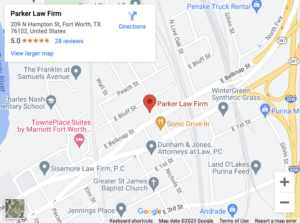
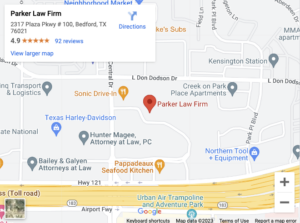
Whether your family visits our Fort Worth office or our Bedford office, you’ll receive the same personal attention and straightforward guidance.
We offer free consultations because we believe every family deserves answers before deciding what to do next.
Frequently Asked Questions
Who Can File a Wrongful Death Lawsuit in Fort Worth, Texas?
One of the first questions families ask after losing a loved one is, “Who can bring a wrongful death claim?”
In Texas, that right generally belongs to a surviving spouse, children, or parents. In some situations, the estate may also be able to bring a separate survivor action for the losses your loved one experienced before they passed away.
If you’re not sure who can file in your family’s situation, it’s worth talking with an attorney. Every case is different, and understanding your options early can help you avoid unnecessary delays.
If more than one eligible family member wants to pursue a claim, those claims can often be handled together as part of the same lawsuit.
How Long Do I Have to File a Wrongful Death Claim in Texas?
After losing someone you love, legal deadlines probably aren’t at the top of your mind. But it’s important to know that, in most situations, families have two years to file a wrongful death lawsuit in Texas.
Even so, it’s usually best not to wait. As time passes, it can become harder to find witnesses, locate records, or gather other information that may help explain what happened.
If you have questions about your family’s situation, having those conversations sooner rather than later can make a real difference.
What Damages Can My Family Recover in a Texas Wrongful Death Case?
Every case is different, but compensation may include financial losses as well as the personal impact of losing a loved one.
Depending on the circumstances, damages may include:
- Lost income and future financial support.
- Medical expenses related to the injury.
- Funeral and burial costs.
- Loss of household services.
- Mental anguish.
- Loss of companionship.
- Loss of parental guidance.
- Other damages are recognized under Texas law.
The value of a wrongful death claim depends on the facts of the case and how the loss has affected the surviving family.
What If My Loved One Was Partially at Fault for the Accident?
A partial fault does not automatically prevent a family from pursuing a wrongful death claim.
Texas law allows recovery in many situations, even when the person who died shared some responsibility for the accident.
Because every case is different, it’s important to have an attorney review the facts before assuming there is no claim.
Does It Cost Anything to Hire a Fort Worth Wrongful Death Attorney at Parker Law Firm?
No. We handle wrongful death cases on a contingency fee basis.
That means you pay no upfront attorney’s fees, and we only get paid if we recover compensation for your family.
We also offer free consultations so you can get answers without worrying about the cost.
Can I File a Wrongful Death Claim If the At-Fault Party Was Also Criminally Charged?
Yes. A wrongful death lawsuit is separate from any criminal case.
Even if criminal charges are filed, dismissed, or never brought at all, your family may still have the right to pursue a civil wrongful death claim.
The outcome of one case does not automatically determine the outcome of the other.
Conclusion
Nothing can prepare a family for the loss of someone they love.
When that loss happens because another person failed to act responsibly, it’s natural to have questions about what comes next and whether your family has legal options.
While no lawsuit can undo what’s happened, it can help provide financial security, hold the responsible party accountable, and give your family the opportunity to move forward.
I’m Brad Parker, the attorney you want but hope you never need.
If you’d like to learn more about wrongful death claims in Texas, spend some time exploring the resources on the Parker Law Firm website. We’ve created them to help families better understand their rights before making any decisions.
If you’re ready to talk with someone about your situation, give us a call. We’ll listen to your story, answer your questions, and explain your options in plain English.
**No fee unless we win.**